
London-based BioOrbit has raised £9.8 million ($13.2 million) in seed funding to scale up the manufacture of pharmaceutical drugs in low-Earth orbit. The company says it is the world's largest seed round ever raised for in-space manufacturing.
The round was co-led by LocalGlobe and Breega, with participation from Auxxo, Seedcamp, Type One Ventures, 7percent Ventures, and angel investors. Founded in 2023 by Dr Katie King and Dr Leonor Teles, BioOrbit is building hardware that uses microgravity to crystallise protein-based drugs at industrial scale.
What does BioOrbit do?
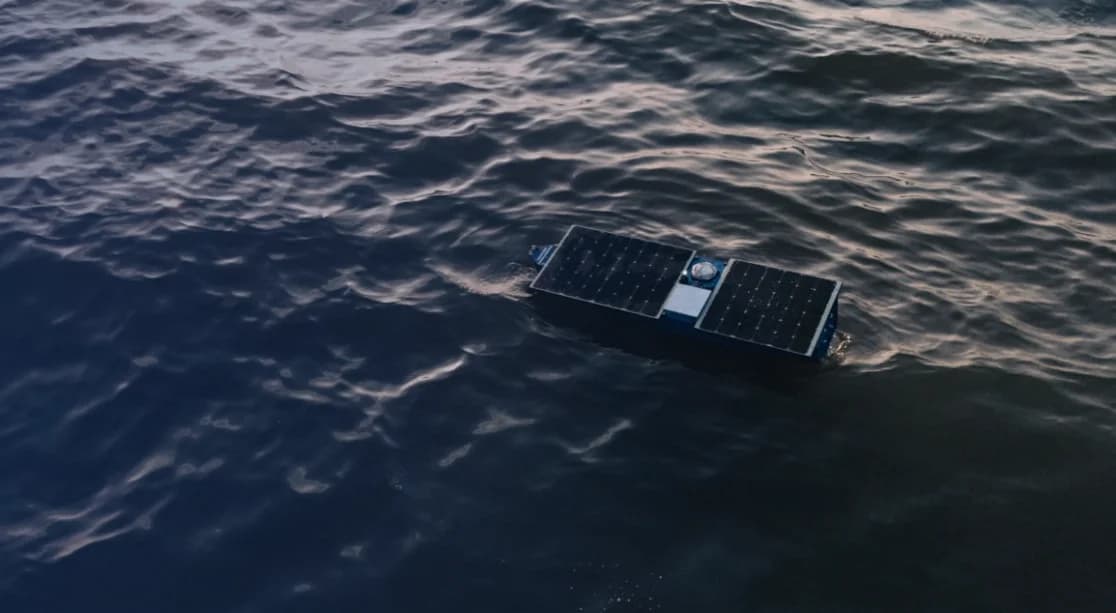
BioOrbit's product is BOX, a compact, modular, autonomous manufacturing unit roughly the size of a microwave, designed to operate in low-Earth orbit and turn crystallisation from a one-off experiment into a repeatable industrial process.
The science matters here. High-concentration antibody therapies are often too viscous for self-administration. BioOrbit's microgravity crystallisation process transforms protein-based drugs into highly ordered crystalline forms, allowing reformulation as a subcutaneous injection patients give themselves at home, rather than an IV drip in hospital. With 70% of the highest-grossing drugs globally administered intravenously, even a slice of that shifting to home administration is a major commercial opportunity.
What will the £9.8 million be used for?
BioOrbit is using the capital to scale from early demonstrations to industrial capacity, open an East Coast US office, and chase contracts with large pharmaceutical firms. To do that, it has hired two Redwire veterans: Molly Mulligan, formerly Redwire's business development lead, has been appointed president of BioOrbit, and Ken Savin, formerly Redwire's chief science officer with two decades at Eli Lilly, takes the same role at BioOrbit.
Dr Katie King, founder and CEO of BioOrbit, said the round signals a step-change. "We are enabling the creation of more perfect crystals in orbit that unlock drug formulations simply not achievable on Earth. It is a paradigm shift for cancer therapies and the pharmaceutical industry at large."
Who is investing in space pharma?
Julia Hawkins, General Partner at Phoenix Court (the home of LocalGlobe), said BioOrbit "turns space into pharmaceutical infrastructure" and described the round as "a fundamental rewrite of how medicines are manufactured and delivered." Breega Partner Matthieu Vallin said the firm "couldn't think of a better use of space than to advance cancer treatments."
The round also drew public endorsements from Major Tim Peake, the British European astronaut, and Lord David Willetts, Chair of the UK Space Agency, who framed the company as well-placed to take advantage of falling launch costs.
Why is this round significant for UK deep tech?
BioOrbit sits in the same emerging UK space-tech cohort as Spaceflux, which raised £9M for sovereign space intelligence, and SatVu, which raised $30M for thermal Earth observation. All three are early-revenue companies anchored by UK government support and now scaling internationally.
The signal is that domain-specific applications of space, not generalised launch and platform plays, are increasingly where capital is going. BioOrbit has already attracted interest from the NHS and the UK Space Agency, and is helping shape pharmaceutical regulation in space alongside the MHRA, Regulatory Innovation Office and CAA.
What this means for UK founders
BioOrbit is a useful case study in how to position a deep tech company that needs years of regulatory work before commercial revenue. Two things stand out for founders thinking through similar journeys, especially around founder-market fit.
First, technical credibility from day one. King's PhD in Nanomedicine from Cambridge and her NASA internship are not biographical decoration. They are signals investors and government partners use to underwrite a long, capital-intensive bet. Second, parallel revenue paths. BioOrbit is also building terrestrial drug manufacturing capabilities, with co-development contracts intended to start the revenue flow before drugs reach patients.
The UK secured second place globally in tech funding for 2025, and rounds like BioOrbit's show why deep tech is a real contributor to that ranking.
We will update this story as BioOrbit's next BOX mission and US expansion progress.
Building a UK deep tech startup or thinking about how to combine science, government partnerships, and commercial scale? Join Bizztor community for case studies, founder interviews, and practical guides.