A startup website does one job at the start: convince a stranger you are real and worth contacting, and you can do that well for very little money. The expensive, custom-built site can wait until you know what actually converts. Early on, speed and clarity beat polish.
Here is how to launch a credible site without spending much.
Buy the domain, rent the rest
Own your domain name, because it is cheap and it is yours. For everything else, rent. A hosted website builder like Carrd, Framer or WordPress.com will get a clean site live in a day for the price of a few coffees a month, with no server to manage.
If your product is a web app, a simple front page on one of these, pointing to the app, is plenty at the start.
When you choose the name, pick something short, easy to spell after hearing it once and free on the main endings you care about. For a UK business that usually means both the .co.uk and the .com, even if you only use one; the other can redirect. Register it in the company's name or your own, never an agency's, and turn on auto-renew so it cannot lapse. Keep the logins for the domain and the site builder in a password manager the company controls, so they do not leave with a freelancer or a former co-founder.
Set up email on the same domain from the first day. Messages from a free webmail address look like a side project, and every email you send from your own domain repeats your web address to the person reading it.
Say one clear thing
Most early startup sites fail not because they look cheap but because a visitor cannot tell what the company does in five seconds. Lead with a plain sentence: who it is for, what it does, what to do next.
One clear message and one obvious button beat a clever design that leaves people guessing. Write the words first, then fit the design around them.
A useful test is the headline you would say out loud to a likely customer at an event. "Payroll for UK restaurants with fewer than 50 staff" is better than "Reimagining the future of work". Under it, add three or four lines on the problem you solve, a short list of what the product does and one button. If you cannot fill the page without vague claims, that is a sign the offer itself needs work.
What the first version needs
Four pages cover almost every early startup. A home page with the headline, the problem, what the product does and one button. A short page on how it works or what it costs. An about page with the people behind the company and why they are building it. A contact page with a form and an email address that someone actually reads.
If your form collects names and email addresses, add a short privacy page that says what you collect, why, and how people can ask you to delete it. Leave the blog, the careers page and the press page until you have something to put on them. Empty sections make a young company look emptier, not bigger.
Build for phones first
Many visitors will see your site on a phone first, and Google reads it the same way. Its documentation on mobile-first indexing says that "Google uses the mobile version of a site's content, crawled with the smartphone agent, for indexing and ranking."
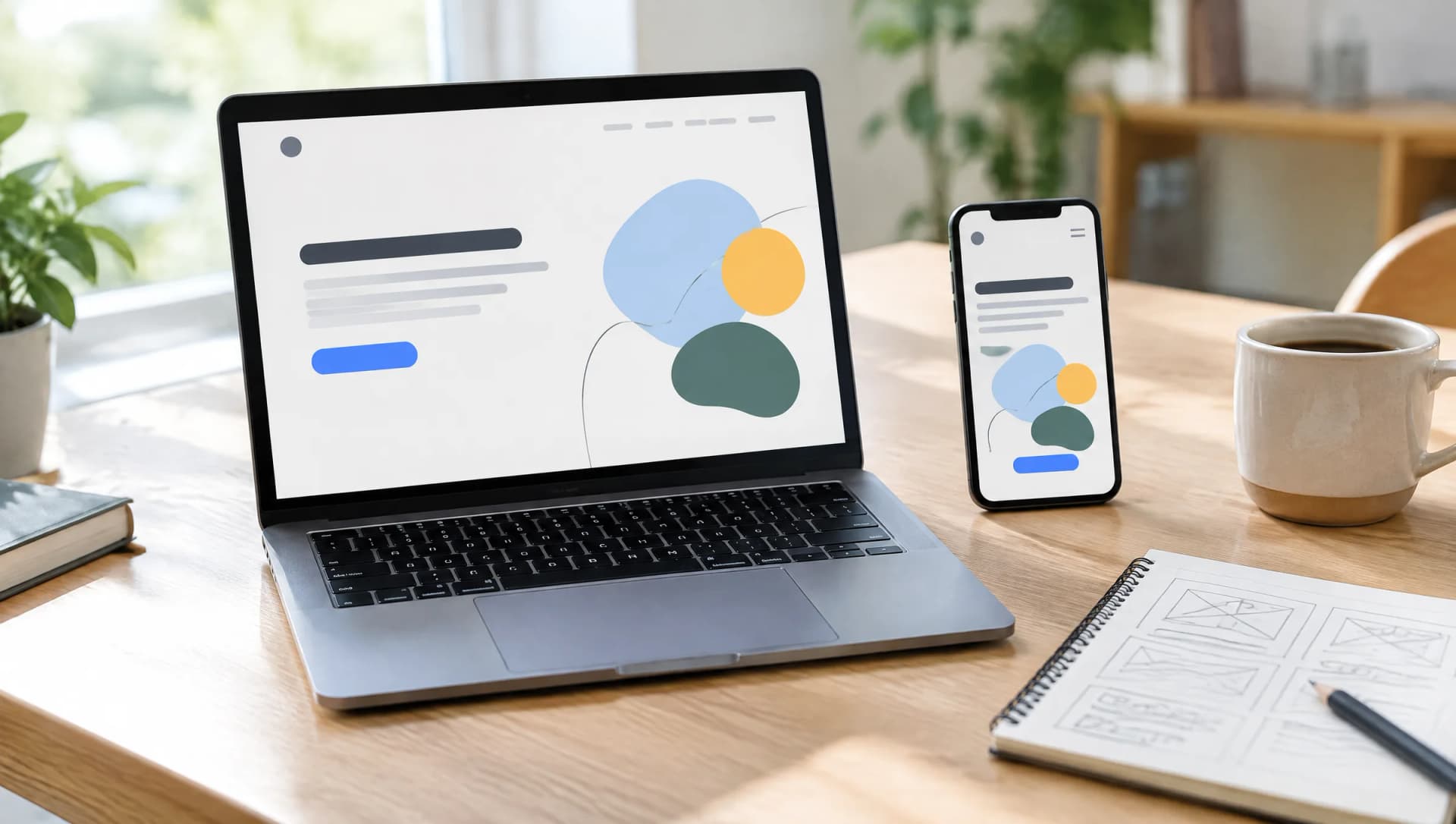
Check every page on your own phone before you share it. The headline should fit without zooming, the button should be easy to tap with a thumb, and nothing important should hide behind a menu. Keep images small and few: a slow page on a train loses people before they read your first line.
Use free tools that do real work
A free plan covers most of what an early site needs: a form that emails you new enquiries, basic analytics, a newsletter sign-up. Connect them with a tool like Make or Zapier so a new lead lands in your inbox without you checking. Our guide to AI tools for small teams covers more that fit a small budget.
Make's free plan gives 1,000 credits a month, which is plenty for routing enquiries from a small site. A shared spreadsheet makes a perfectly good first customer list. Upgrade a tool only when the free version starts costing you time every week, not because the paid one looks more serious.
Help people find you
Search is a slow channel, but the basics cost nothing. Give every page a title that says what is on it, written for people. Google's SEO starter guide says a good title "is unique to the page, clear and concise, and accurately describes the contents of the page."
Write for the questions your customers already ask, in their words. A page that answers one real question well does more than a blog full of generic posts. Search is changing as well: more answers now appear on the results page itself, which our guide to Google zero-click searches explains. That makes a clear brand name people search for directly worth more every year.
If you sell to customers in one town or region, set up a free Google Business Profile as well. For local searches it can bring in more enquiries than the website itself, and reviews there carry more weight with buyers than quotes on your own pages.
Measure enquiries, not visits
Free analytics will tell you how many people visited, but visits are not the number that matters. Count the enquiries, sign-ups or booked calls, and work out what share of visitors take that step. Ten visitors who all book a call are worth more than a thousand who leave.
Check the numbers once a month, not every day, and change one thing at a time: the headline, the button text or the order of the sections. Small sites do not get enough traffic for formal tests, so judge each change over a few weeks and talk to the people who did get in touch about what made them do it.
Build trust cheaply
Credibility is mostly free. A real email address on your own domain, a short honest about page, one or two early customer quotes once you have them, and a working contact form. These do more for conversion than an expensive redesign.
Add the small things a careful buyer looks for: a photo and a name behind the company, a real address or at least the city you work from, and a clear answer about price, even if it is "plans from £20 a month". A hidden price sends many people away without asking.
Use the site to test demand
An early website is also a cheap experiment. Before you build the product, a single page that describes it, with a button to join a waiting list or book a call, tells you whether anyone wants it. Send a small amount of traffic to it and count how many people act. Our guide on how to find one person who will pay before you build takes the same idea further.
Be wary of the common money traps at this stage: premium themes you will outgrow, paid plugins for features nobody uses, and agencies selling monthly packages that promise rankings. None of them fixes an unclear offer.
Spend money on a custom build when you have traffic worth optimising and you know which pages drive enquiries. Until then, a cheap, clear, fast site that says one thing well is not a compromise. It is the right call, and it frees your cash for the part of the business that actually needs it. Spending wisely here is one of the cost-effective habits that keep an early startup alive.