
Sava, the London medtech startup, has raised $36 million (£27 million) in Series B funding led by Ascensia Diabetes Care.
The company is building a needle-free continuous glucose sensor. The round, worth about €32 million and announced on 9 October 2026, takes Sava's total funding to $68 million. Balderton Capital, Pentland Ventures, Norrsken VC, Simplyhealth Ventures and JamJar Investments also took part, according to the company's announcement.
Ascensia is not a typical venture investor. The Basel-based company, part of Japan's PHC Holdings, makes the CONTOUR range of blood glucose meters and sells in more than 90 countries. Alongside the investment, it has signed an exclusive deal to commercialise and distribute Sava's sensor, starting in Europe, once the device gets CE approval.
Sava will spend the money on scaling up manufacturing and getting ready for a commercial launch. It plans a pivotal clinical study this year and is targeting CE approval and a launch within 18 to 24 months, Ascensia said in its own statement.
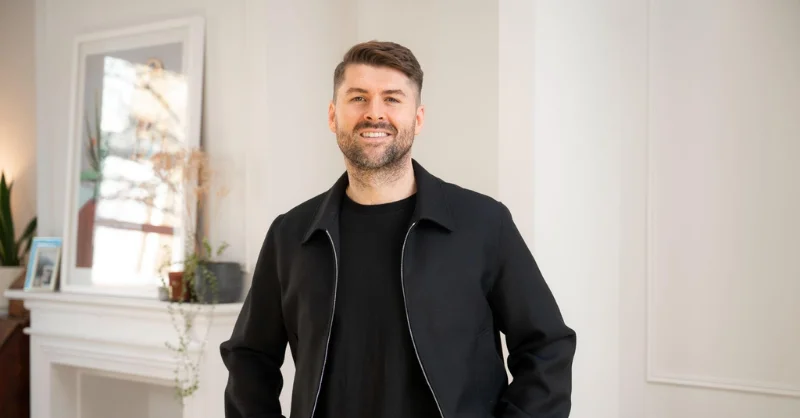
"For decades, continuous monitoring has been held back by the same legacy technology. This is about to change," said Renato Circi, co-founder and co-CEO of Sava.
Peter Bodlund, chief executive of Ascensia, said microsensor technology "has the potential to transform the day-to-day monitoring experience for people with diabetes".
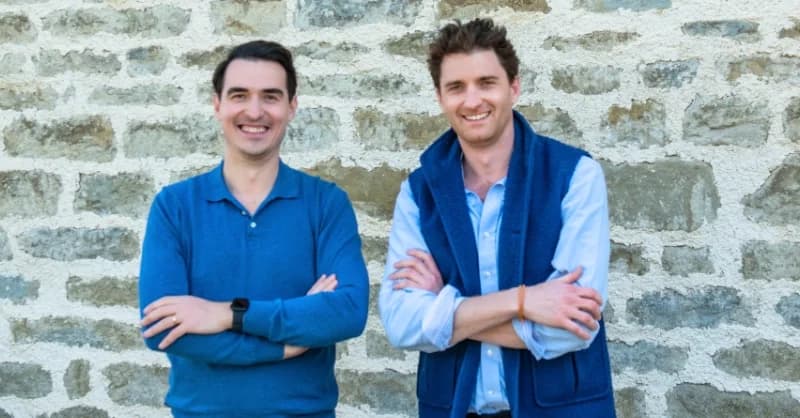
Sava Technologies was founded in 2019 by Renato Circi and Rafaël Michali, two bioengineers from Imperial College London. The company spent five years in stealth before announcing an $8 million seed round in 2024, led by Balderton and Exor Ventures. A $19 million Series A followed in July 2025, co-led by Balderton and Pentland.
The product is a wearable continuous glucose monitor, or CGM. Like the Abbott FreeStyle Libre and Dexcom G7 that NHS patients already use, it sits on the skin and reads glucose from the interstitial fluid just beneath it, then streams the readings to a phone.
The difference is in the sensor itself. Current CGMs push a filament several millimetres into the skin. Sava's microsensors are about ten times shorter, which the company says makes application painless and reduces skin disruption, while still reaching the fluid that carries glucose.
Glucose is the first target, but the platform is built to measure other molecules. The company has talked about lactate, ketones, cortisol, sodium and alcohol, and Circi's line from the Series A was "glucose is only the beginning".
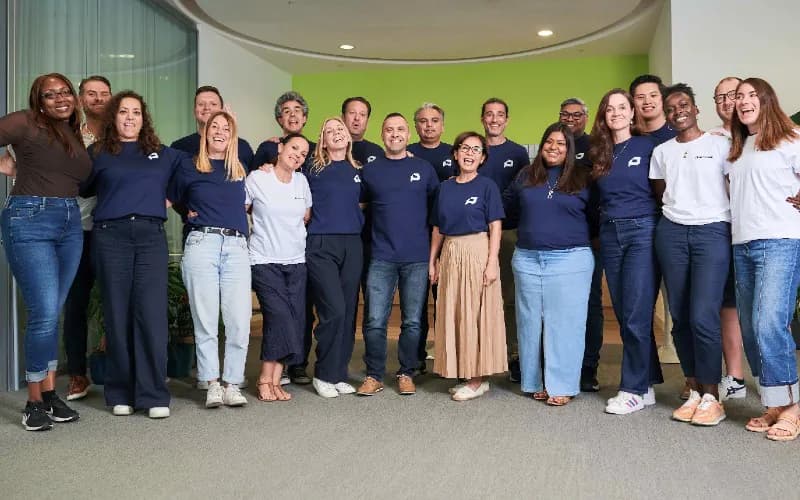
Sava now employs more than 60 people, including former Abbott and Dexcom staff. In May 2026 it hired John Bernard as chief commercial officer, after seven years on Dexcom's EMEA leadership team.
In February 2026 Sava reported results from a 46-person study run by independent investigators at sites in Oxford and Cambridge. Participants had Type 1 or insulin-dependent Type 2 diabetes and wore the sensor for 10 days.
The headline metric in CGM accuracy is MARD, the mean absolute relative difference between the sensor and a lab reference. Sava said its MARD came within about 0.8 percentage points of a commercial CGM worn at the same time, with roughly 1.5 points of drift across the 10 days. It did not publish the absolute figure or name the comparator.
That matters because microsensor devices have historically failed early. Sava says most stop working within five days, and many struggle past 24 hours. Ten days of wear is the minimum needed to compete with incumbents, which now run 10 to 15 days.
These are preliminary results announced by press release, not peer-reviewed data. The larger study planned for this year is the one that will decide whether the device gets to market.
The most telling part of this round is who led it. A Series B led by a distributor rather than a venture fund tells you the commercial path is being locked in before the product has approval.
For Sava, the logic is straightforward. Selling a medical device in Europe means winning over diabetes clinics, pharmacies and national reimbursement bodies, country by country. Ascensia already has direct sales teams in 29 markets and has spent a decade doing exactly that with CONTOUR meters. Sava gets that infrastructure without building it, which keeps its own spending focused on manufacturing and trials.
For Ascensia, the need is just as clear. Fingerstick blood glucose meters are a declining business as patients move to CGMs. Ascensia distributed Senseonics' implantable Eversense CGM for several years, but that arrangement ended in 2025, leaving it without a continuous monitoring product. Sava fills the gap.
The other names on the cap table round out a strong UK bench. Balderton is one of London's largest venture firms and has backed Sava since seed. Pentland Ventures is the investment arm of Pentland Group, the family company behind Speedo and Berghaus. JamJar is the fund started by the founders of Innocent Drinks. Simplyhealth Ventures is the £60 million fund of the Hampshire health insurer Simplyhealth, which is a useful ally for anyone hoping to sell into UK private health.
Sava is not aiming for a basic CE mark. It wants approval for non-adjunctive use, which means a patient can dose insulin from the sensor reading alone, without a confirmatory fingerstick.
That is the standard Abbott and Dexcom meet, and it is a high bar. A CGM in this class is regulated as a Class IIb device under the EU Medical Device Regulation. Regulators pay particular attention to accuracy during hypoglycaemia, when readings matter most and when blood flow to the skin changes.
Hitting that bar on a first-generation device, with a new sensor format, is the central risk in this story. The 18 to 24 month timeline assumes the pivotal study goes well on the first attempt.
The UK is one of the better-served CGM markets in the world. Since NICE updated its guidance in 2022, every adult with Type 1 diabetes in England has been eligible for a CGM on the NHS, a group of more than 250,000 people. Almost all of those prescriptions go to Abbott or Dexcom.
That duopoly is the opening. Globally, Sava and the International Diabetes Federation put the number of CGM users at around 12 million, against 589 million adults with diabetes. Most of the gap is people with Type 2 diabetes who are not on insulin, where payers are reluctant to fund sensors at current prices. A cheaper, less invasive sensor that can be made at volume is the pitch for that market.
Note that Sava's regulatory target is a CE mark under EU rules, not UK authorisation. Since Brexit, the UK runs its own UKCA route, although the MHRA continues to accept CE-marked devices under transitional arrangements. Sava has not set out a UK launch timeline, and its website states the device has no MHRA or FDA approval yet.
Sava is the most heavily funded UK startup trying to build a CGM from scratch, but it is not alone in the wider glucose-sensing space.
Nemaura Medical, based in Loughborough and listed in the US, has spent years on sugarBEAT, a non-invasive patch that reads glucose through the skin without any filament. It won a CE mark for the device but has struggled to turn that into sales.
At the consumer end, Abbott chose the UK as the first market for Lingo, its over-the-counter glucose biowearable, in 2023. London's Zoe built its nutrition business around sensor-based glucose tracking for people without diabetes. Both show there is UK demand beyond the clinic.
Internationally, the closest comparison is Biolinq in San Diego, which raised $100 million in 2025 for an intradermal microneedle sensor and won FDA clearance for a limited Type 2 use case. Sava is chasing a harder target: full insulin-dosing accuracy on a device cheap enough to sell at scale.
UK medtech has had a good run of late-stage rounds this year, from QV Bioelectronics in Cheshire to Cytospire's £61 million Series A. The UK's second place in global tech funding rests partly on hardware and life sciences rounds like these, not only on software and AI.
Three things will decide whether this round pays off. First, the pivotal study: Sava needs accuracy data strong enough for non-adjunctive approval, published in full rather than summarised in a press release. Second, manufacturing: the company has said its sensor was designed for high-volume production, and the Series B is largely about proving that. Third, the Ascensia launch itself, which cannot start until CE approval lands, on the company's own timeline some time in 2027 or 2028.
If all three go to plan, a London company will have put the first serious challenger to Abbott and Dexcom into European pharmacies in a decade. If that study slips, the partnership and the money buy Sava time, but not much more.